1Feeds: time, side and amount
Write the start time of every feed. For breastfeeding, note the side and roughly how long; for bottles, the amount in oz or ml. Patterns in timing matter more than any single feed.
Keep the log where you feed, with a pen that works one-handed.
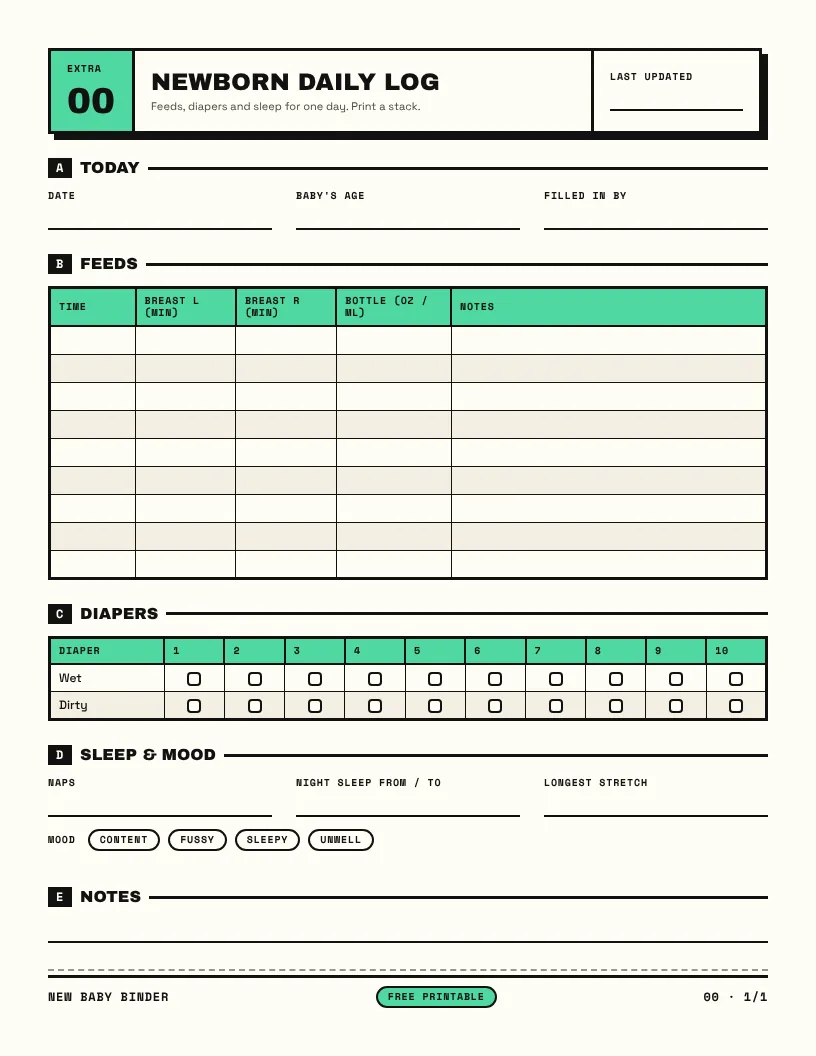
Free printable
Newborn Daily Log →
2Diapers: wet and dirty
Tick each wet and dirty diaper. Diaper counts are one of the main ways pediatricians judge whether a newborn is getting enough to eat, so they're worth tracking even when it feels tedious.
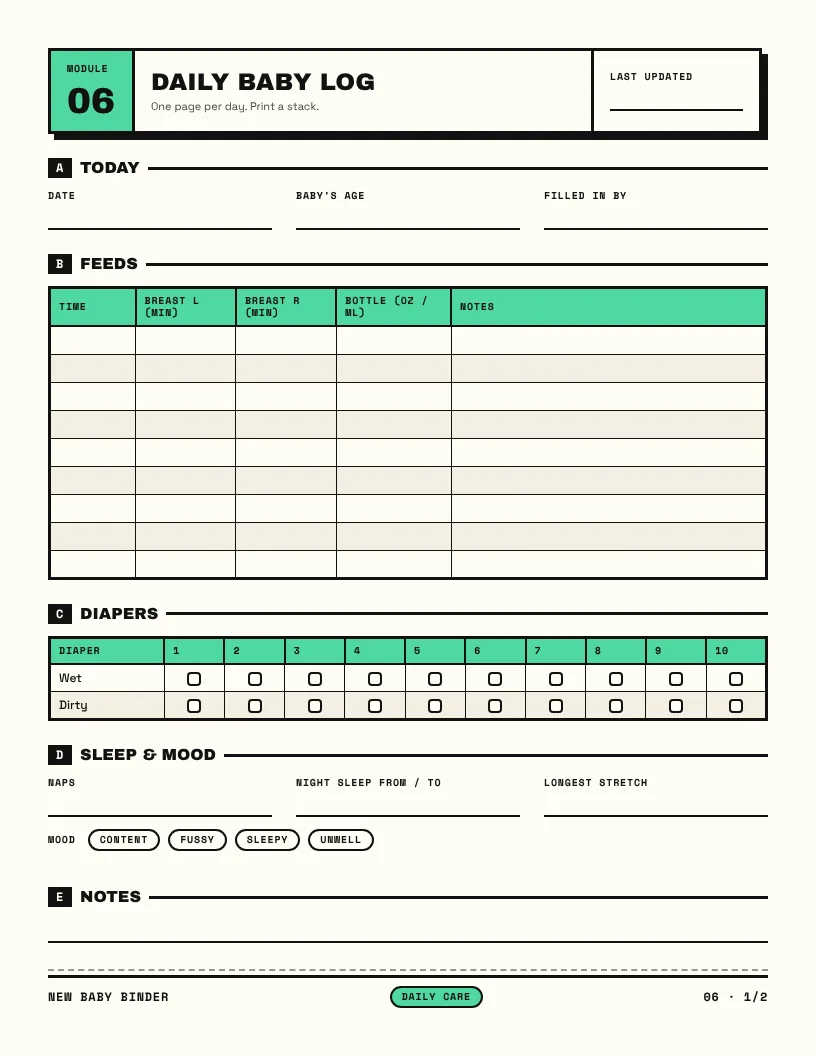
Printable page
Daily Baby Log →
3Sleep: see the pattern, not every minute
A 24-hour chart, with one row per day, shades the hours baby sleeps. After a week the rhythm is obvious, and so are the days that went off track. Mark feeds on the same chart and you'll see how the two connect.
Printable page
Daily Baby Log →
4Checkups: questions before, answers after
Write questions down as they come up between visits, then note what the doctor said, measurements and when the next visit is. A growth log with weight, length and head circumference keeps every measurement in one place.
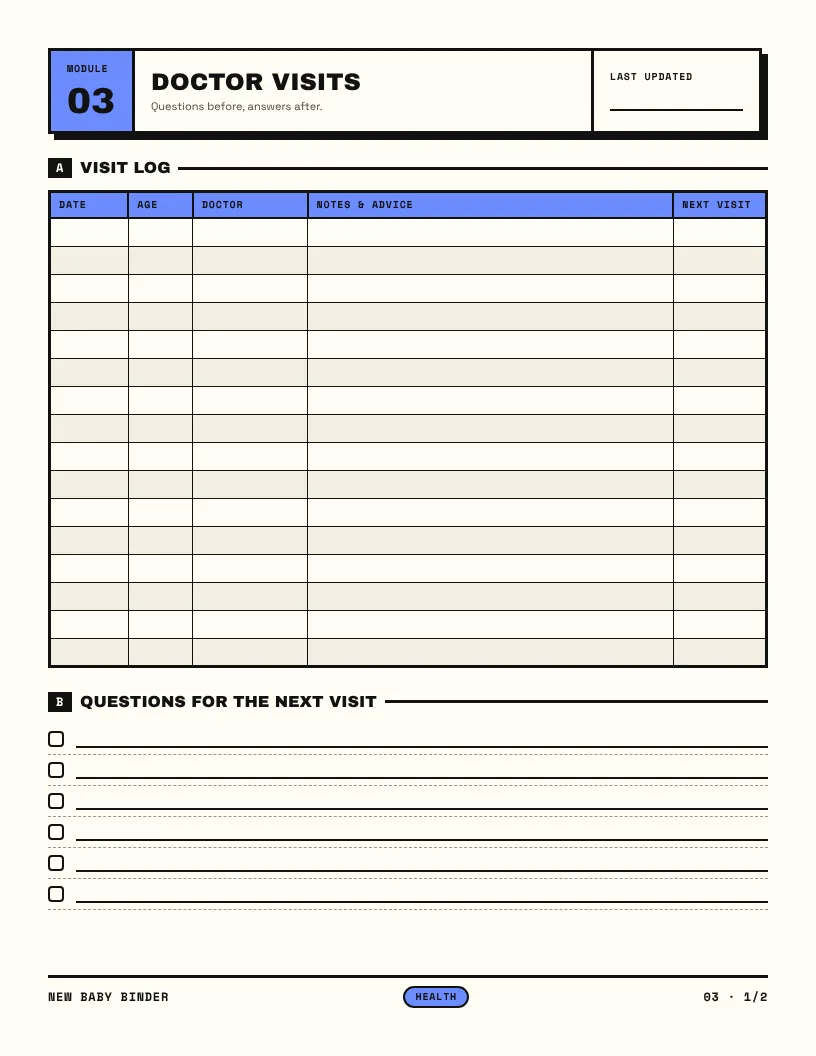
Printable page
Doctor Visits & Growth →
5Medications and fevers
Record every medication given: what, when, how much and by whom, plus temperatures. When two parents are sharing nights, this is what prevents a doubled dose.
Always take doses from the label or your pediatrician, never from memory or guesswork.
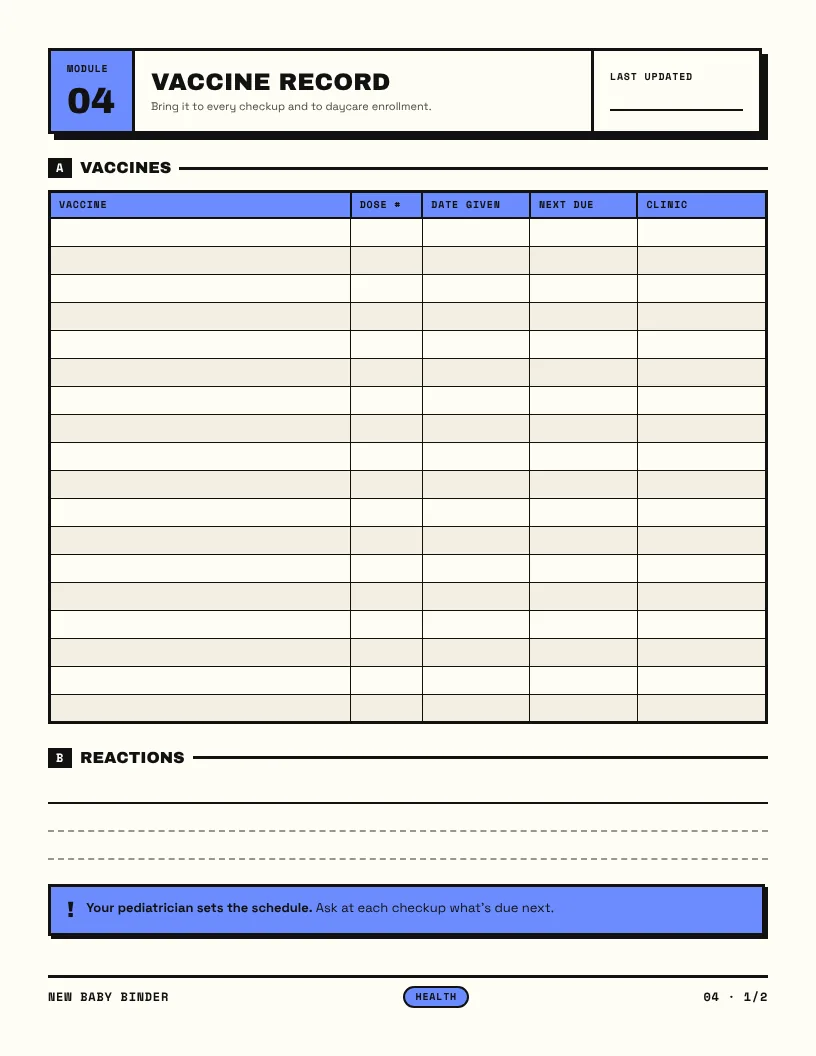
Printable page
Vaccines & Medications →
6When to call
Ask your pediatrician which signs mean you should call, and write them down while you're calm. Save the after-hours nurse line in your phone. And trust your gut: if something feels wrong, call.
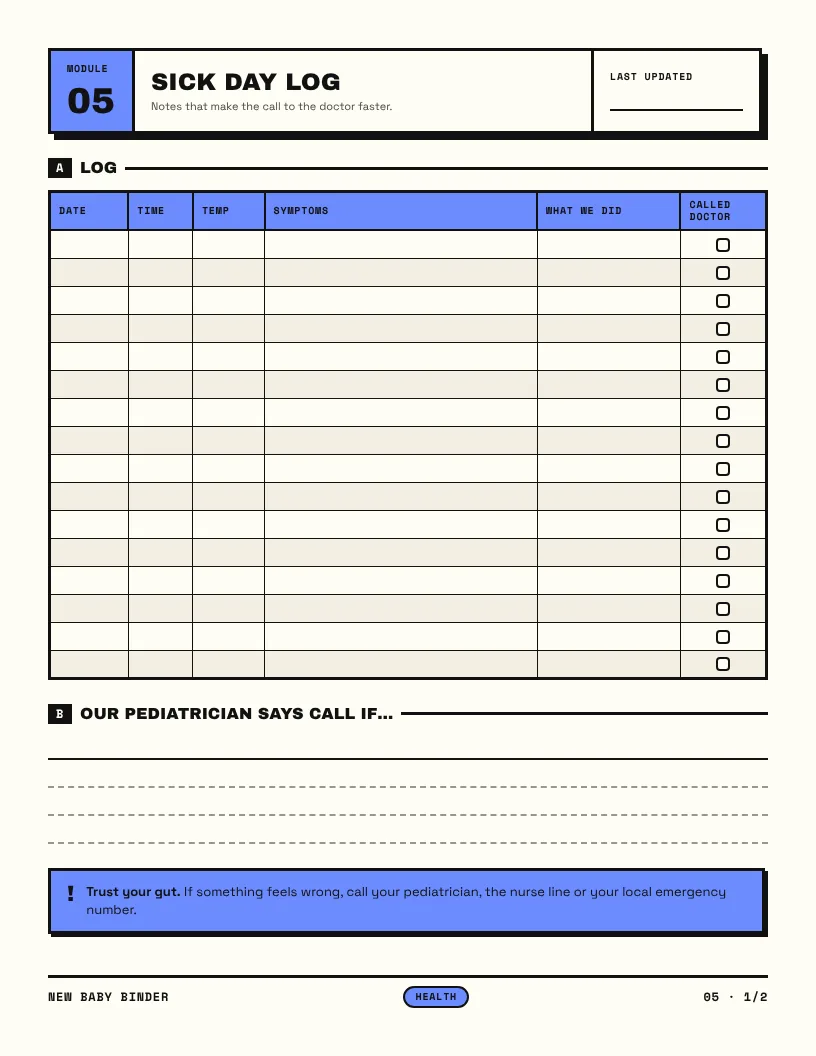
Printable page
Sick Days & Symptoms →
7Make it shareable
The point of a log is that anyone can pick it up: your partner at 3am, a grandparent on a Saturday, a sitter on date night. Pair it with a one-page babysitter sheet on the fridge.
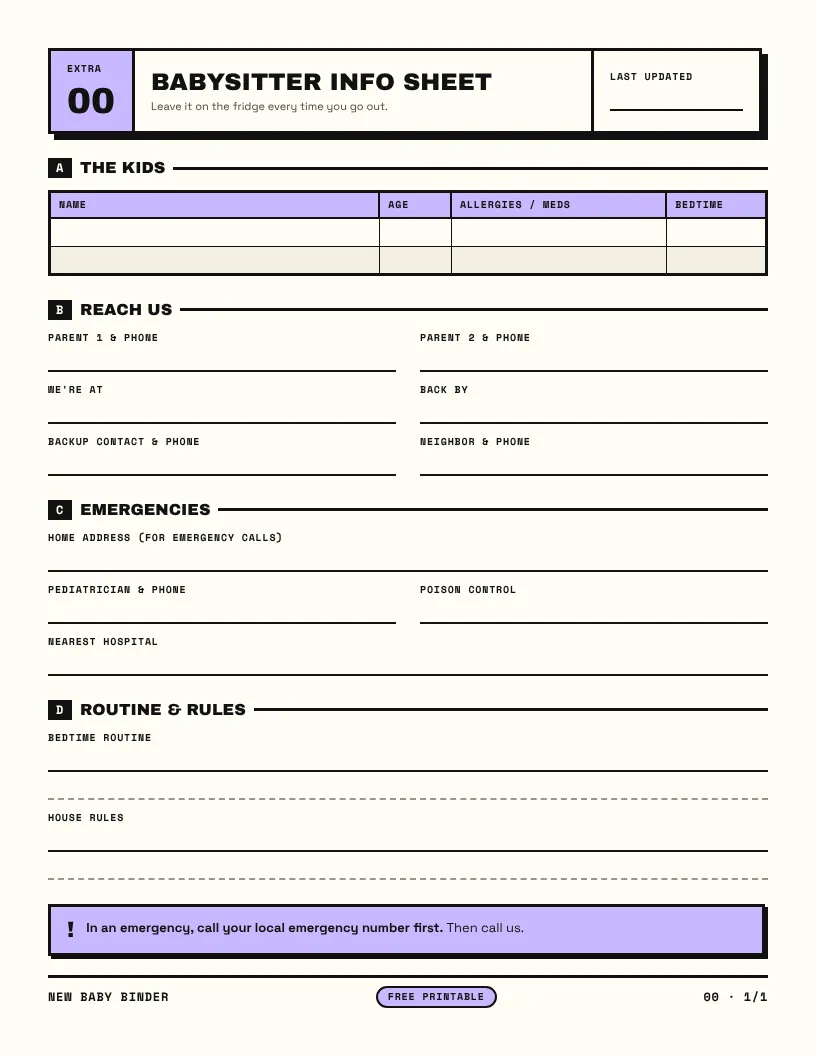
Free printable
Babysitter Info Sheet →